What does an ADA Facility Assessment actually involve?
Think of it as a roadmap—a methodical guide that ensures every part of your facility supports equity, accessibility, and compliance.
In this post, we’ll guide you through the key components of an ADA Facility Assessment, what to expect when working with an accessibility consultant, and why the process is essential—for your facility and the people who use it.
Why an ADA Facility Assessment Matters
An ADA (Americans with Disabilities Act) Facility Assessment is more than a checklist. It’s a critical step toward:
- Creating equitable access — ensuring everyone, regardless of ability, can move through your facility with confidence and dignity.
- Mitigating risk — identifying accessibility issues before they become legal or reputational problems.
- Building trust — showing your commitment to inclusive environments—one that people with disabilities and their families can see and feel.
What An ADA Facility Assessment Actually Involves
Here’s your step-by-step breakdown:
1. Kickoff & Stakeholder Engagement
An assessment starts with a conversation. We will:
- Define goals and scope together—think buildings, routes, entrances, restrooms, signage.
- Ask who uses the space—staff, visitors, contractors, clients, etc. —so that everyone’s needs are considered.
2. Document Review & Preliminary Planning
Before setting foot on-site, we will:
- Review architectural drawings, site plans, and other documentation.
- Check prior audits and existing accessibility policies—anything that sheds light on what has already been done.
This gives context and helps tailor the assessment to your facility’s layout and history.
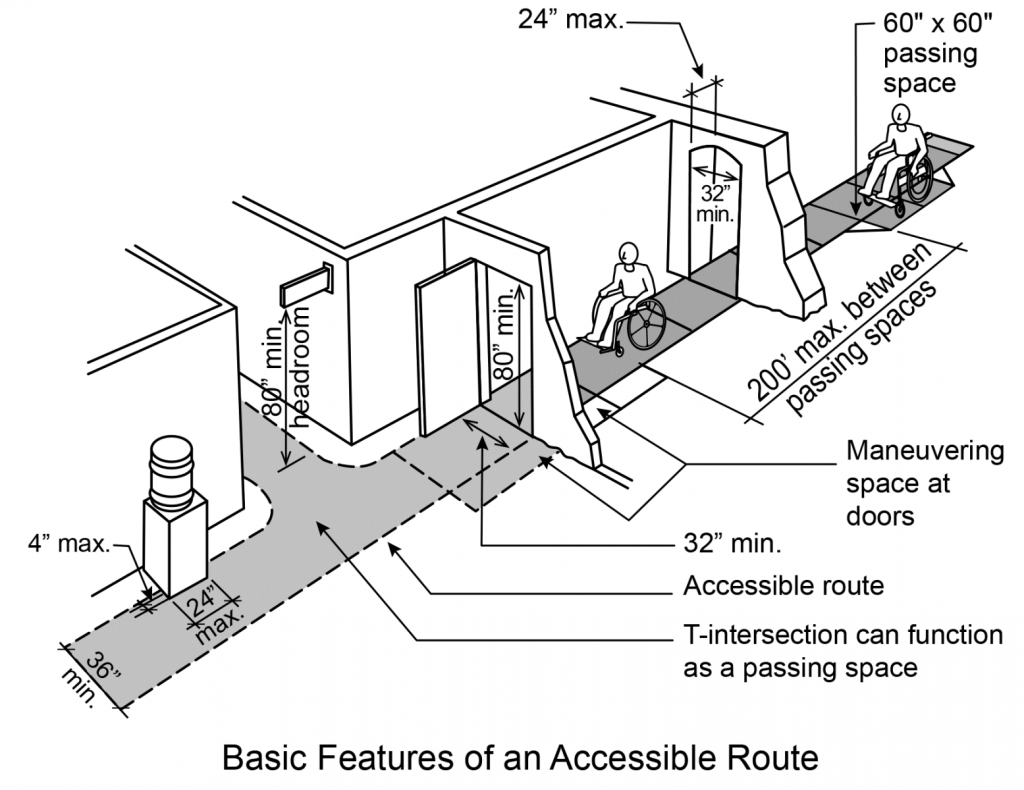
3. On-Site Assessment
This is where the rubber meets the road. We will:
- Measure pathways, entrances, ramps, slopes, and clearances.
- Test door operations, restroom fixtures, signage legibility, parking layout, and accessible routes.
- Document issues thoroughly—with photos, precise measurements, and references to ADA or other standards.
4. Analysis & Prioritization
After data collection, we will:
- Categorize findings by severity: safety-critical issues, compliance gaps, and enhancements.
- Prioritize corrective actions based on impact, cost, and timelines.
5. Recommendations & Reporting
With clarity and precision, we will deliver a report that includes:
- A clear summary of findings.
- Photo-rich documentation.
- Prioritized recommendations for immediate fixes and long-term planning.
- Maintenance tips and preventative guidance, so accessibility remains built-in, not an afterthought.
- Geo-locate exterior finding with findings/photos attached.
6. Next Steps & Support
A great consultant doesn’t just hand off a report— and that’s how we partner with you by:
- Helping you develop an implementation plan.
- Aligning fixes to operational budgets or capital planning.
- Offering future reassessments or staff training on accessibility best practices.
What You Can Expect During the Process
Phase: What It Looks Like
Initial kickoff: Brief questionnaire or meeting to set scope and goals
Documentation review, File-sharing, and virtual discussions
On-site visit, Walk-through with measurements, photos, and observations
Draft report review: Opportunity for feedback and fine-tuning
Final report delivery: Structured recommendations with visuals and timelines
Why This Process Matters for You (and Your Visitors)
- Builds confidence and inclusivity: Visitors and staff with mobility, visual, or cognitive disabilities see that your space was designed with them in mind.
- Protects your organization: Proactively addressing accessibility issues reduces legal risk and demonstrates good governance.
- Saves time and money: A phased, prioritized plan means fixes happen efficiently—targeting the “must-do-now” before overlooking minor fixes that become big problems later.
- Supports your brand promise: Whether you’re in healthcare, retail, hospitality, education, or a municipality, accessibility underscores your commitment to dignity, fairness, and quality.
Final Word
An ADA Facility Assessment is your blueprint for inclusive design—an intentional, transparent process that uncovers barriers, guides solutions, and strengthens trust. When done right, it transforms a building from “barely compliant” into “welcoming to all.”
Need help getting started? Click this link—whether you’re planning your first audit or aiming to elevate your following assessment, we’d love to help you build spaces that work for everyone.